The EF-5 Tornado Drought Is Officially Over
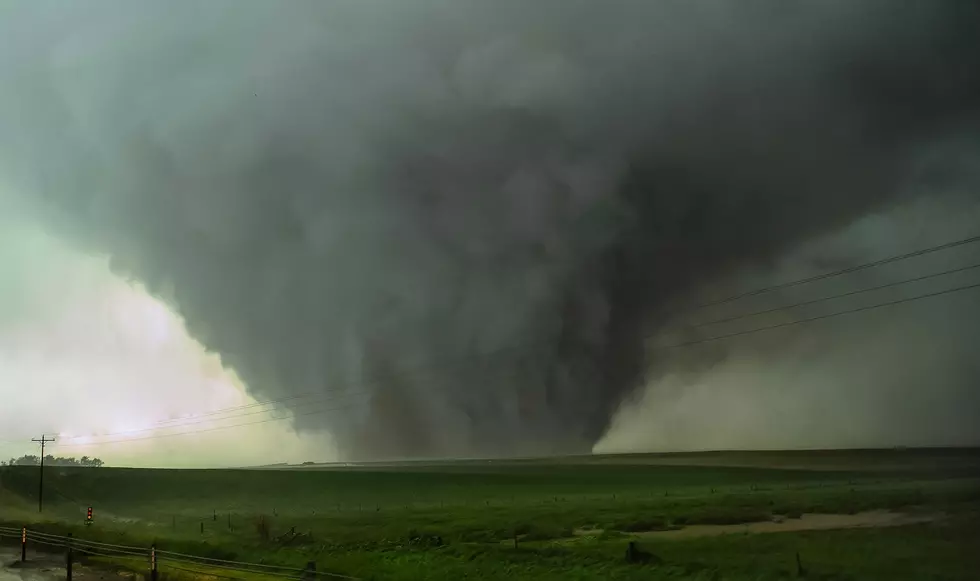
Oklahoma is well on its way to extending the current record on large, destructive tornadoes. For more than twelve years, the country has gone without seeing a confirmed EF-5, the highest rating on the Enhanced Fujita Scale.
That streak started after the May 2013 Moore tornado, the last one to officially earn the title.
That’s not to say we haven’t seen some big ones since. We have. But none were officially rated at the “Granddaddy” level—until now.
While there was a stretch in the late 2000s and early 2010s when EF-5s seemed to hit every year or two, that wasn’t because tornadoes were suddenly growing stronger. It was just a time when the skies turned mean more often, giving everyone across Tornado Alley something to worry about.
What Defines an EF-5 Tornado?
In the long history of meteorology, there have been just 65 F-5 and EF-5 rated tornadoes around the world, dating all the way back to 1764 when Germany recorded the first known monster. The Fujita Scale didn’t exist back then, but later research gave that storm, and others like it, the grim honor of being retroactively rated.
Out of those 65, eight have touched Oklahoma soil. The last two were both here, Piedmont in 2011 and Moore in 2013. The May 3rd, 1999 Bridge Creek-Moore tornado still gets plenty of mention around the country too.
While we've been in an EF-5 drought for a while, many have debated several large tornadoes over the last twelve years, whether they should be assigned the ultimate rating, but the official records have never changed... until now
A Monster Rises in North Dakota
A storm produced a monster tornado last July near Enderlin, North Dakota. While it was initially rated a higher-end EF-4, the National Weather Service officially upgraded it to an EF-5.
While news outlets seem to be talking about wind speeds, it's moot. More on that in a moment...
The evidence in North Dakota ultimately came down to the destruction found on the local railroad, lots of heavy equipment that had been thrown hundreds of feet, and a ground scar that matched those left across Moore, Oklahoma.
Just like that, the longest EF-5 drought in history came to an end.
@fox9mn
What Changed Between July and October 2025
This is all about how tornadoes are rated. The Enhanced Fujita Scale measures destruction, not sheer power. If the strongest part of a tornado touches down over open land, there may not be enough destruction for an EF-5 rating. That's why the largest recorded tornado in the history of Earth is listed mid at best.
The El Reno Monster was the strongest and most intense twister ever recorded, but because it missed towns and neighborhoods, destroying a handful of rural structures and lots of farmland and trees, it only rated as an EF-3.
A handful of later tornadoes ended up in a similar situation - immense strength, minimal damage, not EF-5-worthy.
It’s a flaw many meteorologists point out often. The old Fujita Scale measured wind intensity. The new enhanced scale only measures damage. Science shifted this scale after Oklahoma’s famed 1999 Bridge Creek-Moore F-5. It absolutely redefined how they classify tornado strength.
With Enderlin now earning an EF-5 merit badge, that long stretch without one is over. Let's hope this isn't the start of another EF-5 cycle.
As many weather fans may stand in amazement seeing the power of a true EF-5, nobody in Oklahoma is eager to see another one. We’ve seen what they can do. And if the choice is between wonder and safety, I think we’d all rather let the sky stay quiet a little longer.
Odd and Unbelievable Tornado Facts
Gallery Credit: Kelso
Tornado Records from Around the Country
Gallery Credit: Kelso
Things You'll Need in Your Oklahoma Tornado Prep Kit
Gallery Credit: Kelso
More From KZCD-FM