
Why Nobody Wanted the Oklahoma Panhandle
Every few months, the Oklahoma Panhandle randomly trends online again.
Sometimes it’s a map meme. Sometimes it’s a geography joke. Lately, it’s been people discovering the weird slavery-line history and reacting like they just uncovered a conspiracy.
And every time it happens, the same version of the story gets shared. Texas had to give up land north of the Missouri Compromise line, boom, Oklahoma gets a panhandle, the end.
But the real story is way messier and way more interesting.
Because Texas wasn’t the only one that didn’t want that land.
Texas Wasn’t the Only One
Back in the early 1800s, the Missouri Compromise drew a line across the country at latitude 36°30’. Above that line, slavery was illegal. Below it, states could decide for themselves.
Fast forward a few years, and Texas exists as its own country. Not a state yet. Its borders were huge, like cartoonishly huge. The Texas borders stretched all the way up into parts of modern Colorado, Kansas, New Mexico, and Wyoming.
When the Texan economy collapsed and Mexico saw an opportunity to take back the land, Texas opted to join the United States.
There was just one problem. Slavery couldn’t exist above that 36°30’ line. Texas had a lot of land north of it.
So to get statehood, Texas agreed to give up everything above that line in 1850.
That leftover strip is what would eventually become the Oklahoma Panhandle.
Except it didn’t become Oklahoma right away.
It became… nothing.
When the Panhandle Belonged to Nobody
Literally.
No territory wanted it. No state claimed it. Congress didn’t assign it anywhere. It just sat there on the map as an unclaimed strip of federal land.
For decades, it was officially called the Public Land Strip, but unofficially, people called it No Man’s Land.
That may sound dramatic, but it was accurate.
There was no formal government. No courts. No law enforcement. No real jurisdiction at all.
If you lived there, you were basically on your own, and people absolutely lived there.
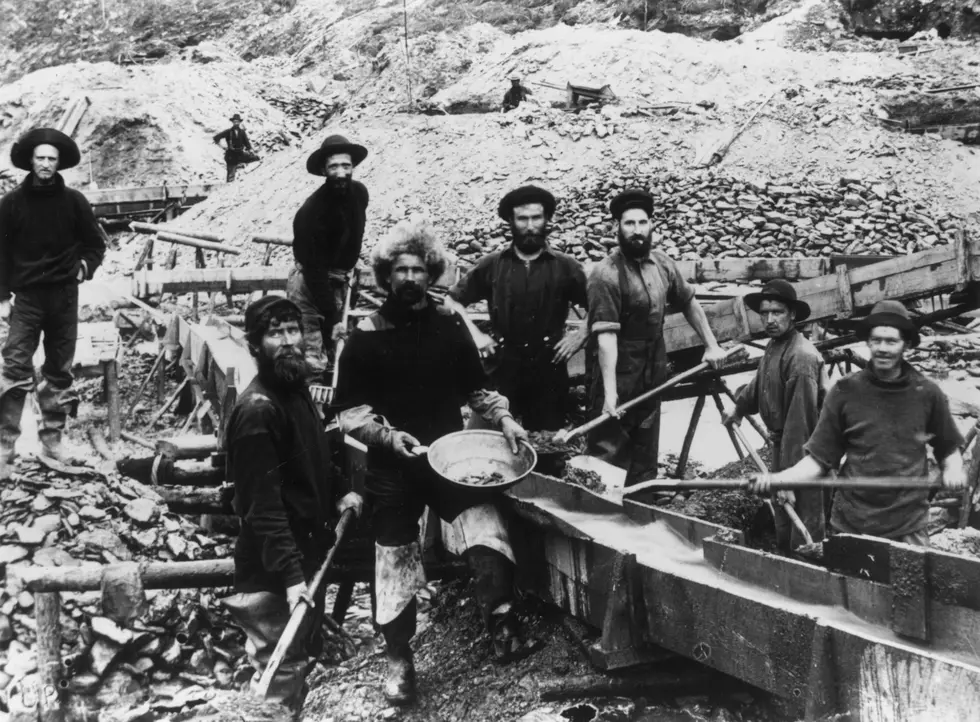
Settlers moved in anyway, mostly ranchers and homesteaders who were fine with the whole “no government” situation. Squatter’s rights became the unofficial rule of the land. Communities popped up. Towns formed. People built lives in a place that technically didn’t belong to any state or territory.
At one point the residents even tried to form their own territory called Cimarron Territory. They wanted recognition, representation, and a legal system.
Emphasize, An Attempt
Congress basically ignored them.
Meanwhile, the land sat between growing territories on every side. Kansas to the north. Colorado to the northwest. New Mexico to the west. Texas to the south.
And here’s the funny part, none of them wanted it.
Kansas had the chance to extend its southern border down and grab the strip. They declined. The land was dry, remote, and sparsely populated. Not exactly appealing when you’re trying to build a young state.
Colorado had the same opportunity on its eastern edge. They passed too. The strip didn’t connect well to their population centers and offered little economic value at the time.
Texas had already given it up and had no interest in getting it back.
So for roughly forty years, the Panhandle was the last remnant of the Wild West.
Finally, in 1890, when the federal government decided to clean up the map, No Man's Land was attached to the newly formed Oklahoma Territory.
Seventeen years later, Oklahoma became a state. The Panhandle finally had a permanent home.
How No Man’s Land Became Oklahoma
Nobody fought for it. Everyone else passed. That makes the story way more Oklahoma.
It wasn���t the prize land. It wasn’t the obvious choice. It was the land nobody else claimed that ended up becoming part of the state anyway.
Now it’s home to Black Mesa, the highest point in Oklahoma. Some of the darkest night skies in the country. Dinosaur tracks. Volcanic rock formations. Wide open prairie that looks nothing like the rest of the state.
Not bad for a place nobody wanted.
So the next time the Panhandle pops up in your feed and someone posts a simplified map explanation, just remember the longer version.
Texas gave it up.
Kansas passed.
Colorado passed.
Honestly, we’re lucky they did. Our Panhandle is one of the most unique parts of the entire state, and it’s the reason people all over the world can spot the Sooner State on a map. They also make the world's best beef jerky up there.
10 Ways to Save on Electric Bills During the Oklahoma Summer
Gallery Credit: Kelso
Things People Really Don't Like About Living in Oklahoma
Gallery Credit: Kelso
16 Unbelievable Sights to Behold in Oklahoma
Gallery Credit: Kelso
More From KZCD-FM